
How Private High School Education Helps Students Boost Grades and Build Confidence
A student’s grades rarely change because of one big moment. More often, improvement comes from a series of small changes: a teacher notices a missed concept, a study routine becomes consistent, a course finally matches the student’s pace, and asking for help starts to feel normal.
Private high school education can create the conditions for those changes to happen more often. With smaller classes, closer teacher support, flexible learning paths, and strong academic resources, many students find that school becomes less overwhelming and more manageable. Grades can improve, but so can confidence, motivation, and the willingness to take on harder work.

Smaller class sizes make it easier to be seen
One of the most common reasons families explore private high school is class size. In a smaller class, students have fewer places to hide when they are confused, and more chances to participate when they are ready.
That shift can make a real difference.
In a large class, a student may miss one lesson in algebra, struggle through the homework, and then fall behind by the next unit. In a smaller class, the teacher is more likely to notice the pattern early. Maybe the student avoids certain questions. Maybe the test shows one repeated mistake. Maybe homework is complete, but the method is shaky.
When teachers can spot problems sooner, they can respond before those problems grow.
Smaller classes often help in practical ways:
Students receive feedback more quickly.
Teachers can check for understanding during the lesson.
Quiet students get more chances to speak.
Group work can be more purposeful.
Classroom routines can be adjusted when students need more time.
This does not mean every student improves overnight. It means the warning signs are easier to catch. For many teens, that alone can reduce stress. They no longer have to wait until report cards arrive to find out they are struggling.
Smaller classes can also help strong students. A learner who finishes work early may get extension tasks, harder reading, extra lab questions, or deeper writing prompts. Growth is not only about catching up. It is also about being challenged at the right level.
Personalized attention turns “try harder” into a clear plan
Students are often told to “study more” when grades slip. That advice is too vague to be useful. A student who studies for hours but uses weak methods may still see little progress.
Personalized attention helps turn effort into direction.
A teacher, advisor, or learning support specialist can help identify what is actually getting in the way. The answer might be different for every student.
One student may understand class discussions but lose marks because written answers lack detail. Another may know the content but freeze during timed tests. Another may skip review until the night before because they do not know how to plan.
Private schools often have the time and structure to help students build a more specific plan. That plan might include:
Weekly check-ins with a teacher or advisor.
A study schedule built around tests, projects, and activities.
Extra practice in one subject area.
Help breaking essays, labs, or presentations into steps.
Test preparation built into regular routines.
Feedback on drafts before final submission.
The value is not only academic. When students know what to do next, they often feel less defeated. A low mark becomes information, not an identity.
A Grade 10 student struggling in science, for example, may learn that the issue is not the whole course. The real problem may be reading lab instructions too quickly or missing the connection between formulas and word problems. Once that becomes clear, improvement feels possible.
That is where confidence starts to rebuild.
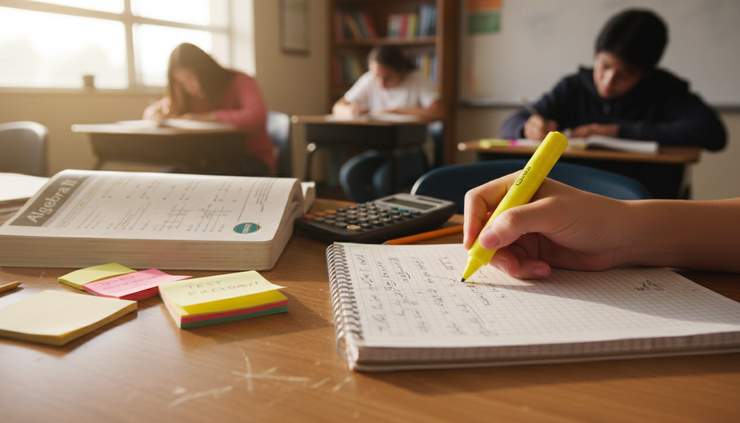
Tailored curricula can match the student’s pace and goals
A strong curriculum does more than cover material. It helps students build skills in an order that makes sense.
Private high schools may offer more room to tailor course loads, academic pathways, and enrichment options. This can be especially helpful for students who need support in one area while advancing in another.
For example, a student might take extra writing support while staying in an advanced math class. Another might need a lighter transitional term after changing schools, then add more demanding courses once routines improve. A student preparing for university may benefit from courses that emphasize research, seminar discussion, lab skills, or independent projects.
This kind of flexibility can help students avoid two common problems:
Being pushed too quickly
Students may move on before they have mastered the foundation. Gaps build quietly, then appear later in tests or assignments.
Being held back too long
Students who need more challenge may lose interest, rush through work, or fail to develop strong study habits.
A tailored curriculum can also connect learning to the student’s goals. A student interested in health sciences may take biology seriously once they see how it links to future studies. A student who enjoys design may become more engaged when math connects to architecture, engineering, or digital media.
Grades often improve when the work feels both reachable and meaningful. The right level of challenge matters. Too easy, and students coast. Too hard, and they shut down. A well-matched curriculum helps them stay in the productive middle, where effort leads to progress.
Better study habits are taught, not assumed
Many students reach high school without a clear system for studying. They reread notes, highlight chapters, or cram the night before a test. Those habits can feel productive, but they do not always lead to strong results.
Private schools often place more emphasis on teaching students how to learn. That can include study skills sessions, advisory periods, teacher conferences, academic coaching, or structured homework time.
Effective study habits are usually simple, but they need practice.
Students learn to plan before the pressure builds
A good study plan starts before a test is close. Students can learn to look ahead at due dates, divide large assignments into smaller tasks, and review a little each day.
For example, instead of “study for history,” a plan might look like this:
Monday
Review class notes and define key terms.
Tuesday
Create a timeline of major events.
Wednesday
Write one practice paragraph using evidence.
Thursday
Review teacher feedback and quiz with a classmate.
Friday
Rest, then do a short final review.
This helps students avoid panic and gives teachers time to step in if something is unclear.
Students practise active recall
Active recall means pulling information from memory instead of only reading it again. Students might close the textbook and explain a concept out loud, write a summary without notes, or answer practice questions.
This method can feel harder than rereading, but it helps students discover what they actually know. It also prepares them for tests, where they must retrieve information under pressure.
Students use feedback as a tool
Feedback is only useful when students know how to act on it. In a private school setting, teachers may have more time to review mistakes one-on-one.
A student can learn to ask better questions, such as:
Where did my answer lose marks?
What would a stronger thesis look like?
Did I make a content mistake or a communication mistake?
Which skill should I practise before the next assessment?
These questions shift the focus from the mark itself to the next step.

Private school resources can remove barriers to progress
Grades do not depend only on effort. Students also need access to the right tools, spaces, and people.
Private high schools may offer resources that make academic growth easier to sustain. These vary by school, but many include:
Learning support staff.
Guidance counsellors.
Subject-specific extra help.
University and college advising.
Libraries and research databases.
Writing centres or math support.
Peer tutoring.
Clubs that build academic skills.
Quiet spaces for homework and review.
These supports matter because students often struggle in more than one way at once. A student with weak essay marks may need writing instruction, but they may also need help managing deadlines. A student with test anxiety may understand the course material, but need coaching on preparation, timing, and confidence.
Support systems work best when they are connected. If a teacher, advisor, and family all understand the same goal, the student receives a clearer message. They are not left to manage every problem alone.
For students who are new to a private school, the first few months can be a major adjustment. Smaller communities often make it easier to build routines quickly. Teachers learn names. Advisors notice absences or missing work. Coaches and club leaders may reinforce the same habits students need in class: preparation, follow-through, and teamwork.
The result is a stronger academic safety net.
Confidence grows when students experience real progress
Better grades can build confidence, but confidence also helps produce better grades. The two often grow together.
When students feel capable, they are more likely to ask questions, attempt challenging work, and recover from mistakes. When they feel discouraged, even small setbacks can seem like proof that they are “bad at” a subject.
Private school environments can help break that cycle by giving students more frequent moments of success. A student who used to fail quizzes may begin earning steady passes. A student who dreaded English may complete an essay plan early and receive useful feedback. A student who never spoke in class may lead a small group discussion.
These experiences matter because they change the student’s story about school.
Academic growth is not only a higher average. It is a student learning, “I can improve when I use the right support and habits.”
That belief can carry into university, college, apprenticeships, and the workplace. Students who learn how to seek help, manage time, and revise their work are building skills that last far beyond high school.
Student growth stories show what change can look like
Every student’s path is different, and no school can promise a specific grade increase. Still, common patterns appear when students receive the right mix of structure, attention, and support. The following examples are composite stories based on typical student experiences, with details kept general.
Maya found her voice in smaller classes
Maya was a capable student, but she rarely asked questions. In middle school, she worried that speaking up would slow everyone down. By Grade 9, her math marks had started to drop because she kept small misunderstandings to herself.
In a smaller private high school class, her teacher noticed that Maya completed homework but skipped certain multi-step problems. Instead of waiting for the next test, the teacher met with her during extra help and reviewed the exact step where she lost confidence.
Within a term, Maya was asking questions during lessons. Her marks improved, but the bigger change was her attitude. Math became a subject she could work through, not a subject she had to fear.
Liam learned how to study before tests
Liam spent long hours “studying,” but his results were inconsistent. He often reread notes late at night and felt prepared until the test began. His private school advisor helped him build a weekly review routine using practice questions, flashcards, and short self-quizzes.
His teachers also helped him compare his study method with his test performance. He saw that he was memorizing definitions but not practising application questions.
Over time, Liam became more strategic. He studied in shorter sessions, started earlier, and checked his understanding before test day. His grades rose gradually, and his stress dropped because he no longer relied on last-minute cramming.
Noor connected schoolwork to future goals
Noor had strong creative skills but felt disconnected from some academic subjects. After moving into a school with more course guidance, she chose electives and projects that connected writing, design, and social issues. In English, she worked on essays related to media and culture. In math, a teacher helped her see how patterns and measurement applied to design fields.
That connection did not make every assignment easy, but it gave her a reason to persist. Her attendance improved, her assignments became more complete, and she began planning for post-secondary options with more confidence.

What families can look for in a private high school
Choosing a school is a personal decision. The best fit depends on the student’s needs, goals, learning style, and well-being. Grades matter, but they should not be the only measure.
When exploring private high school options, families can ask practical questions:
How large are core academic classes?
How do teachers identify students who are falling behind?
What extra help is available during the week?
How often do students receive feedback before final grades?
Are study skills taught directly?
What support exists for writing, math, organization, or test preparation?
How does the school communicate with families?
Can the curriculum support both challenge and remediation?
What guidance is offered for post-secondary planning?
It can also help to visit during a regular school day, if possible. Look for how students interact with teachers. Notice whether classrooms feel focused and respectful. Ask how the school supports students who are capable but underperforming, since that group often needs more than a simple reminder to work harder.
A strong private school should be able to explain how it helps students grow, not only what courses it offers.
The strongest results come from partnership
Private high school can provide structure, resources, and close support, but students still play an active role. The best outcomes happen when the school, student, and family work together.
Students can support their own growth by:
Attending extra help before they feel lost.
Using a planner or digital calendar every week.
Reviewing feedback before starting the next assignment.
Studying in short, focused sessions.
Asking teachers specific questions.
Keeping sleep, meals, and activities in a healthy rhythm.
Treating mistakes as part of learning.
Families can help by focusing on habits as much as marks. Instead of asking only, “What grade did you get?” they can ask, “What feedback did you receive?” or “What will you try differently next time?” That kind of conversation builds responsibility without adding shame.
Private high school education can make academic improvement feel more reachable. Smaller classes help students get noticed. Personal attention turns confusion into a plan. Tailored curricula keep students challenged at the right level. Study habits, resources, and support systems give them tools they can use for years.
The goal is not simply a better report card. The deeper goal is a student who knows how to learn, how to ask for help, and how to keep going when school gets difficult. That confidence can change the way they see themselves, one assignment, one test, and one success at a time.


Comments